

How To Build An 820 Conveyor Belt
Whether you're operating a large or pocket-sized business organization, we know that every 2d counts. That's why designing your modular chugalug conveyor arrangement correctly, to ensure smooth running and minimal interruptions to daily operations is so important.
And then how tin can you design a modular conveyor belt organisation that works for you? Here are some ideas, and things to consider for your next belt conveyor.
What is a modular belt conveyor?
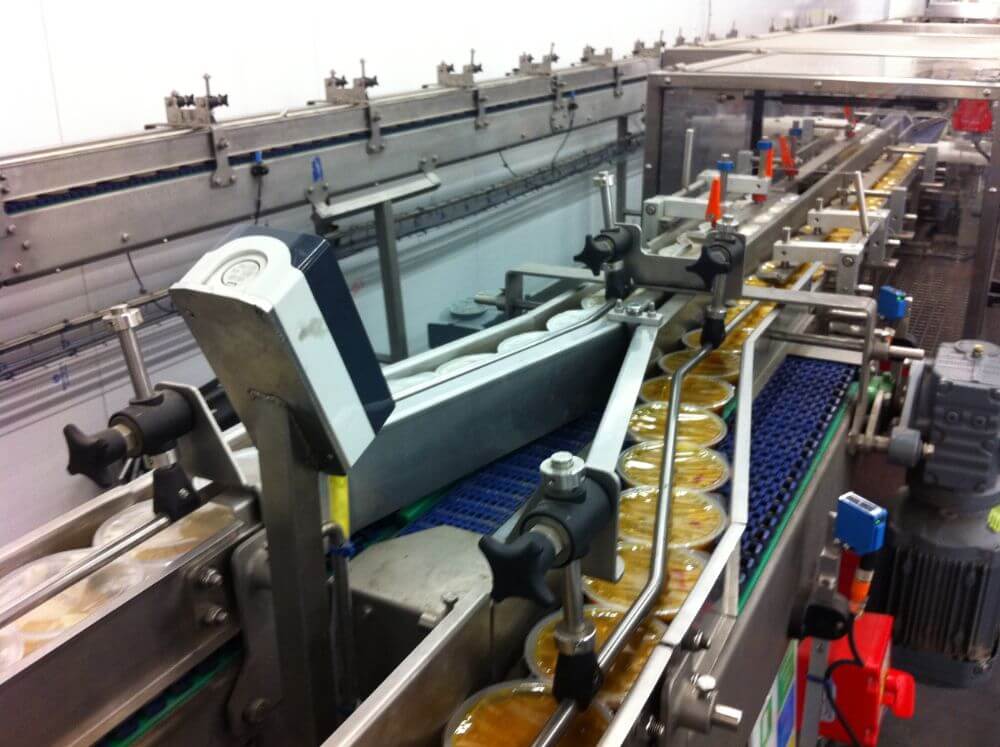
A modular chugalug conveyor is a flat belt conveyor and is made up of individual plastic or steel modules normally linked together using joint rods. Modular chugalug conveyors are suitable for conveying components or packed materials throughout product areas inside factories. An advantage of a modular belt conveyor is that curved sections of belts are available.
The modular chugalug is robust and can tolerate high and low-temperature products. Large chugalug widths are possible without loftier pre-tensioning.
Specialist applications for modular belt conveyors include:
- Packaging lines
- Cooling and drying applications (air can permeate through belt)
- Dewatering applications
- Assembly lines
- Singulation systems
- Tray merging or routing
- Warehousing distribution
Components of an Intralox modular chugalug

How are loose items contained?
Side guides can be fitted to preclude loose items falling off the belt and for increasing bed depth. Side guides may exist mounted on the belt or static. Static side guides add friction to the chugalug and then must be included in whatever calculations to determine chugalug pull.
How to comprise loose items when changing height?
Flights can be fitted to the belt to provide pockets in the chugalug to contain loose production sliding on an inclined belt. Commonly side guides will be fitted when flights are used. Flights add weight to the belt and must be included in belt pull calculations.
When is a modular belt conveyor non suitable?
Modular chugalug conveyors are not suitable for conveying loose granular or powdered materials. The belts are flat and cannot contain loose material, and the belts are a series of open links so small particles would autumn through. Modular chugalug conveyors tin be washed; however, the links are classed as crevices and therefore precludes this type of belt for highly hygienic applications. Modular belt conveyors are by and large used for lite loads and not suitable for very long distances without linking several conveyors together.
What Is the All-time Material?
The choice of fabric is dependent upon awarding parameters.
Acetal
A thermoplastic that is stronger than polyethylene and polypropylene and has a expert residue of mechanical and thermal backdrop. Good fatigue endurance. Depression coefficient of friction making it a expert choice container handling and send. Suitable for temperatures between -46 deg C and 93 deg C.
Polyethylene
A lightweight thermoplastic that has superior flexibility and bear upon strength. Excellent product release characteristics. Suitable for temperatures between – 73 deg C and + 66 deg C. Resistant to many acids, bases and hydrocarbons.
Polypropylene
For use in general applications and where chemical resistance may be required. Good balance of moderate force and lightweight. Suitable for temperatures from 1 deg C to 104 deg C. Becomes breakable at depression temperatures so not suitable for cold conditions.
Nylon
Suitable for abrasive wet and dry heavy duty applications. Temperature range is -46 deg C to 116 deg C.
CRFR
An engineering textile suitable for food processing where a high caste of chemical resistance is required. Exceptional resistance to strong acids, sanitation chemicals, salts, alcohols and oxidants. CRFR is however extremely hydrophobic. Temperature range -18 deg C to 66 deg C.
Detectable Acetal
Developed for food applications where it is essential to be able to notice production contamination using metal or x-ray detectors. Metal filled material volition not rust or expose precipitous particles. Temperature range from -46 deg C to 93 deg C.
Detectable Polypropylene
Developed for food applications where it is essential to be able to detect product contamination using metal or x-ray detectors. Metal filled textile will non rust or betrayal sharp particles. Temperature range from -18 deg C to 66 deg C.
Stainless steel
Extremely rugged, long lasting belt for heavy duty applications. Extremely open structure allowing superb air flow for heating, drying and cooling applications.
Safety, compliance and standards
All modular belt conveyors are designed and manufactured to comply with national and international standards of best do and safe. The overall conveyor is designed to conform to BS EN 620. Guarding complies with BS EN ISO 14120, and all electric components adapt to IEC 60204-1.
With conveyor belts causing 30% of all injuries in the nutrient production manufacture, there are too risk factors to consider in your belt system to protect your workers from unnecessary impairment or danger.
As with all products sold in the European Union each modular chugalug conveyor will need to fully comply with European union Directives and comport the CE mark to confirm it complies.
What are the design parameters required in a modular belt conveyor?
A detailed understanding of the production to be handled, the operating and environmental weather is essential earlier designing the modular belt conveyor. The designer will want to know the following:
- The type of belt system required: straight, radius or spiral
- The overall dimensions of the installed belt, length, width, top change
- Speed of chugalug or throughput required
- Product characteristics: density, unit size and shape, hardness, brittleness, texture. Corrosiveness, wet content, temperature, abrasiveness.
- Procedure requirements: heating, cooling, washing, draining, drying
- Hygiene requirements: conformity to standards, cleaning requirements
- Methods of loading and unloading the belt
- Environmental: Temperature, humidity, chemicals, abrasive or hazards.
- Type of drive system
Seven Steps:
Pace 1: Select a suitable chugalug type
Footstep 2: Calculate the pull on the belt
Step iii: Adjust belt pull for specific conditions
Step four: Calculate commanded belt strength
Step 5: Check belt selected is suitable
Step 6: Calculate sprocket and bulldoze shaft requirements
Step vii: Calculate power needed to drive the belt
Deciding on the right specification of modular conveyor belt tin be a complicated job as in that location are and then many parameters to consider. If you require assistance, delight contact Dodman who are always happy to aid.
How Long Can Your Belt System Exist?
The length of each section of modular belt conveyor is express by the strength of the belt to overcome the belt pull. Multiple modular belt conveyors tin can be linked together to provide very large and complex systems.
How to Brand Your Conveyor Belt Fit Your Infinite
Conveyor belts can exist supplied in a range of standard and customised widths to suit the load and infinite they are housed in. Your conveyor belt system can also move loads beyond different vertical planes, then you lot tin can maximise your infinite in three dimensions.
All the same large or small your conveyor chugalug requirement, we will have a solution for you. Our in-firm design engineers tin ensure that any your space and needs, we can supply and maintain your conveyor belt arrangement, so it provides optimum performance, all day, every day.
To find out more nigh our chugalug conveyor systems or to request a quote for your projection, contact Dodman today.
Source: https://www.dodman.com/designing-your-modular-belt-conveyor/
0 Response to "How To Build An 820 Conveyor Belt"
Post a Comment